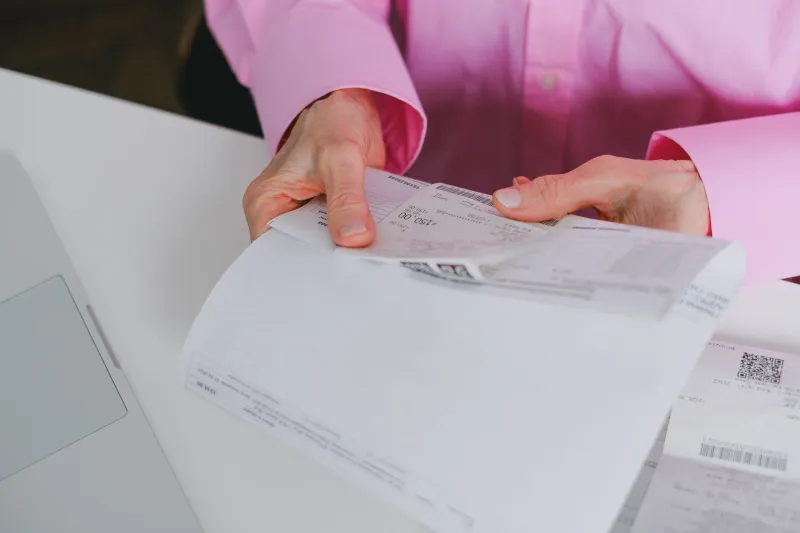
Scattered Money, Smaller Refund: Why Aussies Are Handing the ATO More Than They Owe

Tax time in Australia has a funny way of making people feel like they've done something wrong — even when they haven't. You sit down in July, try to piece together twelve months of income and expenses, and suddenly realise your financial life looks like a jigsaw puzzle tipped out of the box. Money came in through PayID. Some went out via a BNPL app. Freelance work got paid into one account. Your side hustle earnings landed in another. And somewhere in the middle of all that, a pile of legitimate deductions quietly disappeared.
This isn't a rare situation. For a growing number of Australians — particularly those juggling gig work, freelance contracts, or small side businesses alongside a day job — fragmented finances aren't just inconvenient. They're expensive.
The Modern Aussie Money Problem
The way Australians manage money has changed dramatically over the past decade. Digital wallets, payment apps, instant transfer platforms, and buy-now-pay-later services have made it easier than ever to move money around. But easier doesn't always mean smarter.
When your income flows through multiple channels and your expenses scatter across different platforms, keeping a clear financial picture becomes genuinely difficult. A delivery driver might receive earnings through one app, pay for fuel using a digital wallet, and track vehicle maintenance costs on a completely separate platform — if they track it at all. A freelance graphic designer might invoice clients through one tool, receive payments via bank transfer, and buy software subscriptions through a third-party service that doesn't categorise expenses in any tax-friendly way.
By the time 30 June arrives, reconstructing that financial trail is a stressful, time-consuming mess. And when things get messy, deductions get missed.
What's Actually Getting Lost
The ATO allows Australians to claim a wide range of work-related deductions — everything from home office expenses and professional subscriptions to vehicle costs, equipment purchases, and even certain phone and internet bills. But there's a catch: you need records. Receipts, transaction histories, invoices. The kind of documentation that's easy to maintain in real time and nearly impossible to reconstruct six months later.
When your spending is spread across multiple apps and accounts, the natural tendency is to lose track of what was work-related and what wasn't. That $79 software subscription you bought in September — was it for the freelance job or personal use? The Uber trip in November — was that a client meeting or a night out? Without a clear system, these questions become guesswork, and most people default to caution. They don't claim what they're not sure about. The ATO keeps the difference.
Then there's the late payment problem. When income is unpredictable and spread across multiple sources, it's easy to underestimate what you owe in PAYG instalments or forget that a good quarter of gig work has pushed you into a higher tax bracket. Penalties for late or underpaid tax aren't enormous, but they're entirely avoidable — and they sting precisely because they're self-inflicted.
Gig Workers and Freelancers Cop It the Hardest
If you're a full-time employee with a single employer, tax is mostly handled for you. Your payroll system withholds the right amount, your employer reports it, and your return is fairly straightforward.
But Australia's workforce doesn't look like that anymore. The gig economy has grown significantly, and millions of Australians now earn income from multiple sources simultaneously — rideshare driving, freelance writing, tutoring, selling handmade goods, renting out a spare room. Each income stream comes with its own payment method, its own platform, and its own set of potential deductions.
These workers are essentially running small businesses, but many of them don't have the tools or systems that small businesses use to stay organised. They're managing their finances the same way they manage their personal spending — reactively, informally, and often without any real-time visibility over where their money is going.
How Integrated Platforms Change the Game
This is where smart digital finance platforms start to earn their keep beyond just moving money around quickly.
When your payment activity, transfers, and spending all flow through a single integrated platform, the data picture becomes dramatically clearer. Instead of logging into four different apps to piece together your transaction history, everything is in one place. Categories are consistent. Dates are accurate. And when you need to pull a record for a deduction, it's already there.
Some platforms are beginning to offer features specifically designed to help users track deductible expenses in real time — flagging business-related transactions, generating exportable summaries, and even integrating with tax tools so that the work is largely done before you sit down with your accountant.
For a freelancer or gig worker, this kind of visibility isn't just convenient. It's financially meaningful. The difference between claiming every legitimate deduction and missing half of them can easily run into the hundreds of dollars — sometimes more, depending on your income level and the nature of your work.
Simple Habits That Make a Big Difference
You don't need to overhaul your entire financial life overnight. A few targeted changes can make tax time dramatically less painful.
Consolidate where you can. The fewer platforms your money moves through, the easier it is to track. If you're using three different apps to receive payments, consider whether one or two could handle everything instead.
Label expenses as you go. Many banking and payment apps let you add notes or tags to transactions. Get into the habit of marking work-related spending immediately — while you still remember what it was for.
Run a monthly money check-in. Spend fifteen minutes at the end of each month reviewing your transactions and flagging anything that might be deductible. Doing this monthly is infinitely easier than trying to do twelve months at once in July.
Keep a digital receipt folder. Whether it's a dedicated email folder, a cloud storage folder, or an app like ATO's own myDeductions tool, having one consistent place for receipts removes the scramble at tax time.
Know your obligations early. If you're earning from multiple sources, get across your PAYG instalment obligations before the end of the financial year — not after. A quick conversation with an accountant in March or April can prevent a nasty surprise in August.
The Bigger Picture
Australia's tax system isn't designed to punish people for having complex financial lives. But it does require a level of organisation that the fragmented nature of modern digital payments makes genuinely difficult to maintain.
The good news is that the tools to fix this are increasingly accessible. Integrated payment platforms, smart expense tracking, and real-time financial visibility aren't just for big businesses anymore. They're available to the delivery driver, the weekend freelancer, and the Etsy seller with a day job.
The Aussies who take advantage of them won't just have an easier tax time. They'll get more of their own money back — which, at the end of the day, is exactly what the system is supposed to allow.