Set, Forget, and Slowly Go Broke: The Silent Autopay Epidemic Hitting Aussie Bank Accounts
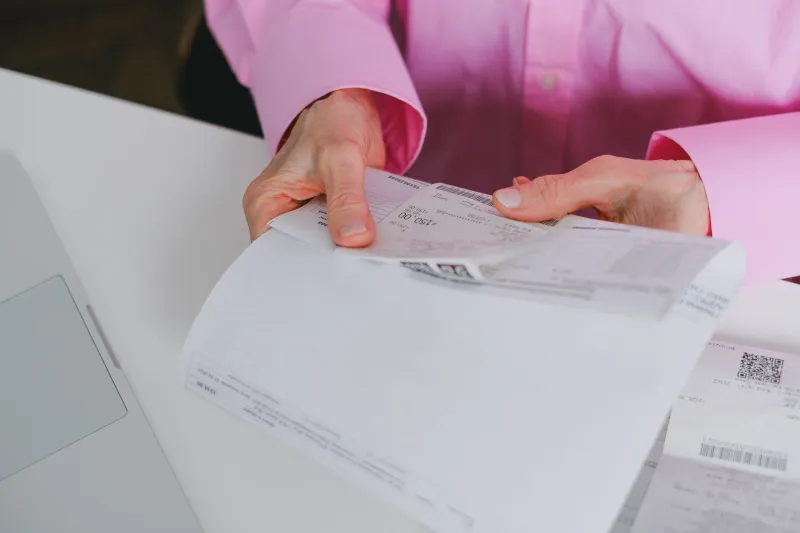
There's a particular kind of financial pain that doesn't announce itself. It doesn't come as a big bill or a declined card at the checkout. It arrives in tiny, forgettable increments — $12.99 here, $24.95 there — until one day you stare at your bank statement and genuinely can't account for where several hundred dollars went.
This is the autopay trap, and if you're an Australian with a smartphone, a gym membership, or literally any streaming account, there's a decent chance you're already in it.
The Convenience That Became a Liability
Recurring payments were sold to us as a gift. No more late fees. No more remembering due dates. Just link your card, tick a box, and move on with your life. For a lot of things — rent, utilities, phone plans — that logic holds up fine.
But the same friction-free system that makes paying your electricity bill effortless also makes it effortless to keep paying for a yoga app you opened twice in 2022.
Australian consumer advocacy groups have repeatedly flagged the scale of this problem. Research from various financial watchdogs suggests the average Australian adult is unknowingly paying for somewhere between four and seven services they no longer actively use. When you start multiplying even modest monthly fees across a year, the numbers get uncomfortable fast. Some estimates put the annual loss per household at over $1,000 — and that's a conservative figure.
Why Your Brain Is Working Against You
This isn't just about forgetting things. There's genuine psychology at play here, and the companies running these subscription models know it intimately.
The first trick is called payment decoupling. When you're not physically handing over cash — or even consciously approving a transaction — the emotional weight of spending disappears. Autopay is the ultimate payment decoupler. The money leaves your account while you're asleep, or at work, or watching telly. You never feel it go.
The second mechanism is loss aversion flipped on its head. Normally, humans are wired to feel losses more sharply than gains. But when a charge has been running for long enough, cancelling it starts to feel like a loss — even if the service is worthless to you. "What if I need it next month?" is the internal monologue that keeps thousands of Australians paying for things they haven't touched in a year.
And then there's the cancellation friction that many companies deliberately engineer. Ever tried to cancel a gym membership? You often can't do it through the app. You have to call during business hours, speak to a retention specialist, and navigate a conversation specifically designed to make you reconsider. That friction is a feature, not a bug.
The Categories Doing the Most Damage
Not all recurring charges are created equal. Some are genuinely worth every cent. Others are financial sinkholes dressed up in clean app design. Based on patterns emerging from Australian banking data and consumer complaints, here are the categories worth scrutinising hardest:
Streaming and entertainment — Most households now carry three or more streaming subscriptions simultaneously. With prices creeping up across the board, what once felt like a reasonable entertainment budget has quietly become a significant monthly outlay.
Fitness and wellness apps — Gym memberships are notorious, but the app-based fitness world has made it even easier to sign up impulsively and forget entirely. A $15/month meditation app you downloaded during a stressful week in March is still billing you in November.
Insurance premiums on autopilot — This one catches people off guard. Auto-renewing insurance policies often come with annual price hikes built in. If you haven't actively reviewed your home, car, or health insurance in the past 12 months, you may be paying significantly more than the market rate for identical coverage.
Cloud storage and software tools — That Adobe subscription from when you briefly got into photo editing. The cloud backup service from a laptop you no longer own. These linger indefinitely because they're small enough to ignore but consistent enough to add up.
Free trials that weren't free — The classic. You signed up for a 30-day trial, meant to cancel, and didn't. Now you're six months in and the company is $90 richer.
How to Actually Audit Your Recurring Payments
The good news is that getting back in control isn't complicated — it just requires a bit of deliberate attention. Here's a practical approach that works.
Step one: Pull up three months of statements. Don't rely on memory. Go through your last 90 days of bank and credit card transactions line by line. Highlight anything that looks like a recurring charge. You'll likely spot several things that surprise you.
Step two: Categorise ruthlessly. For each recurring charge, ask yourself one question — did I actively use this in the last 30 days? Not "could I use it" or "might I use it." Did you actually use it? If the answer is no, it goes on the cancellation list.
Step three: Check your email for forgotten sign-ups. Search your inbox for terms like "subscription," "free trial," "billing," and "renewal." You may uncover services you completely forgot existed.
Step four: Use your bank's tools. Many Australian banks and digital finance platforms now offer features that flag recurring transactions and help you track spending by category. If your current bank doesn't offer this visibility, it might be worth looking at platforms that do — because managing your money well starts with actually being able to see your money.
Step five: Set a recurring calendar reminder. Do this audit every three months. Put it in your phone right now. The trap only works when you're not paying attention — so pay attention on a schedule.
The Bigger Picture
There's a broader issue lurking beneath all of this. Australia's consumer protections around subscriptions and recurring billing have historically lagged behind the complexity of the market. Regulators have pushed for clearer cancellation pathways and better disclosure requirements, but enforcement is slow and the sheer volume of subscription services makes oversight difficult.
In the meantime, the responsibility sits largely with individual consumers — which isn't entirely fair, but is the reality. The companies running these models have entire teams dedicated to reducing churn. You're essentially fighting a professionally optimised system with nothing but your own vigilance.
That's not a reason to give up. It's a reason to take it seriously.
Your Money, Your Rules
Autopay isn't inherently evil. For the right services, it's a genuinely useful tool that saves time and prevents missed payments. The problem is the passivity it encourages — the assumption that because you set something up once, it must still be working in your favour.
Your financial life changes. Your priorities shift. The services that made sense 18 months ago might be completely redundant today. Treating your recurring payments as a permanent fixture rather than an ongoing choice is exactly how companies count on you to behave.
Don't give them that. Get into your statements, find the leaks, and plug them. Even recovering $50 a month from unused subscriptions is $600 a year — money that could be sitting in your savings, paying down debt, or just giving you a bit more breathing room.
Smart money management isn't about dramatic overhauls. It's about noticing the small things before they quietly become big ones.